
Floor · Sydney
Marble floors, ground flat and polished end to end.
Traffic paths gone matte, tiles sitting a hair proud of their neighbours, grout darker than the stone. A floor is the one job where the machine does most of the work, and the result is the biggest.
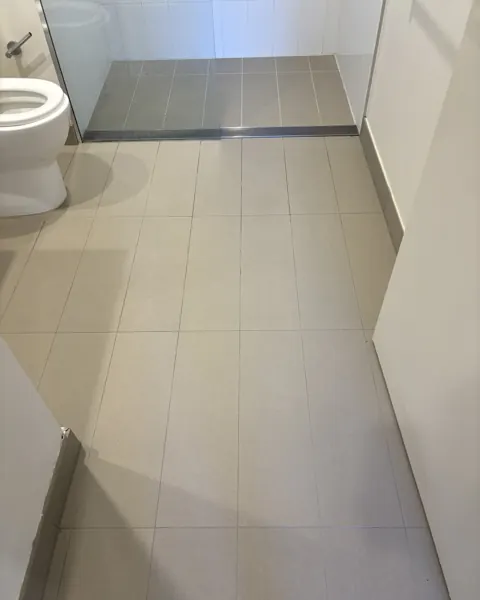
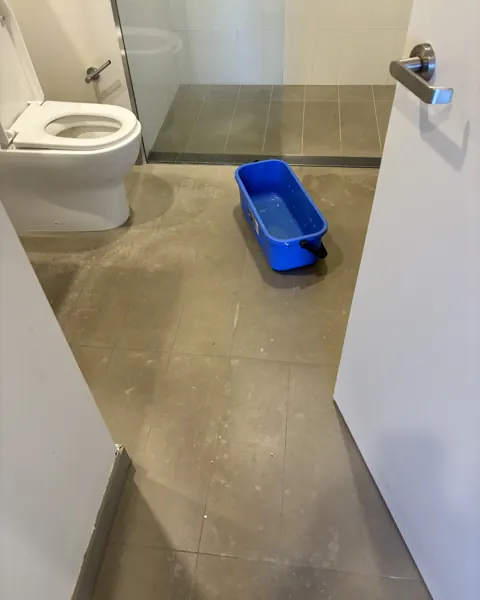
What we do to a floor.
Floors fail slowly. The walking line between the door and the kitchen loses its polish first, then the grout darkens, then the lippage between tiles starts catching the light. Grinding levels the tiles to one plane, honing removes the wear, polishing brings the reflection back. It is the most transformative job in the trade and the one most people put off longest.
- Lippage ground flat so the floor reads as one surface
- Traffic wear honed out along the full run
- Polished to an even reflection, or honed for a matte finish if you prefer it
- Grout cleaned back and, where it has failed, sealed
- Sealed, with drying time before furniture goes back
The price shape.
Method first, then the band. Every figure on this site comes from invoices, never from a guess.
Floor restoration
Priced by area above a stated threshold. A large entry or open-plan floor is usually two to three days, and rooms can stay in use around the work.
5 documented floor jobs.
Shot as found and as left, from the same spot. What could not be fixed is on every record.
A grey stone bathroom floor, cleaned back and resealed
Grey stone tile · Floor · Feb 2025
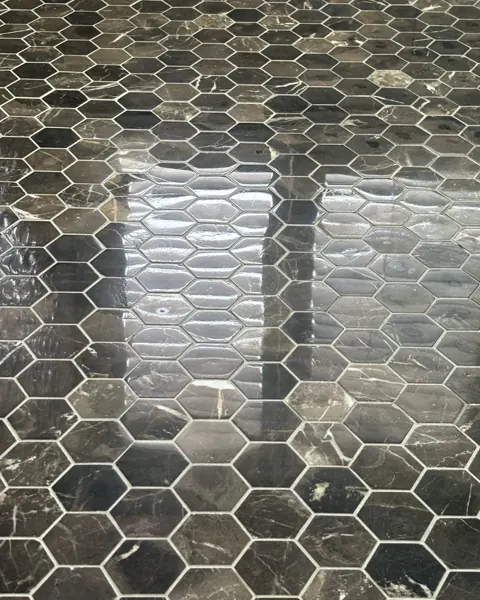
A black hexagon mosaic floor, from hazy to mirror
Black marble hexagon mosaic · Floor · Nov 2024
A cream marble bathroom, floor and vanity, polished as one job
Cream marble · Bathroom · Oct 2024
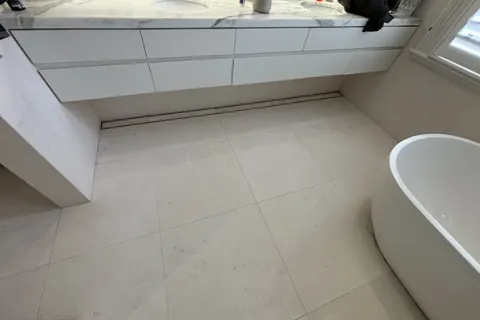
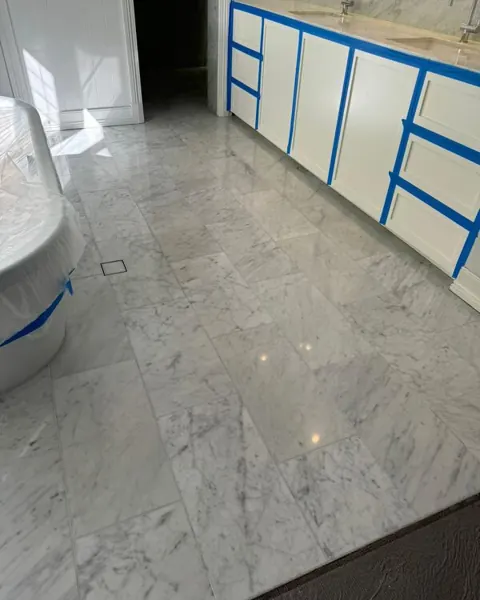
A white marble bathroom floor, ground flat and polished
White marble · Floor · Date to confirm
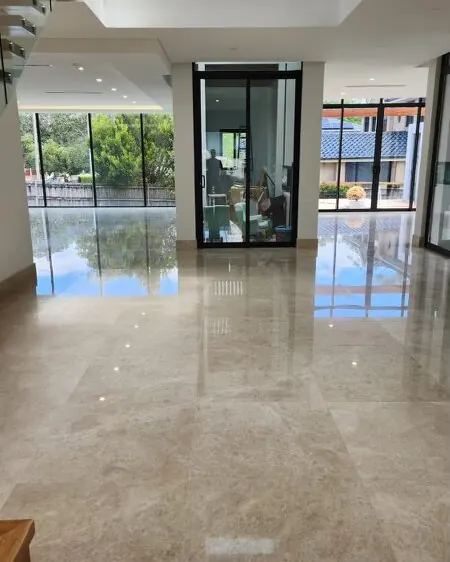
A double-height entry hall floor, polished end to end
Cream marble · Floor · Date to confirm
Questions about floors
How long does a marble floor restoration take?
A large entry or open-plan floor is usually two to three days. A single room is a day. The time goes into grinding, honing, polishing and sealing, each pass across the whole floor, with drying time between the last polish and the sealer. Rooms can stay in use around the work; we move through the house in sections so you are never locked out of everything at once. The floor is walkable the same day it is polished and fully cured a day or two after sealing. We give you a schedule before starting so you know which rooms are out of action and when.
Do you move furniture?
Yes, within reason. Sofas, dining tables, rugs and most freestanding pieces we move and put back. Fitted joinery, appliances and anything plumbed in stays where it is and we work around it, protecting it as we go. Very heavy or valuable pieces are best moved before we arrive, and we say which ones when we quote. A stone dining table is usually worked in place rather than moved, since it is heavier than it looks and the risk of damage in moving it is higher than the inconvenience of working around it.
Is it messy? How much dust is there?
Very little. Marble is polished wet. Water keeps the abrasives cool and it keeps the dust down, so the process produces a slurry that is vacuumed up rather than a cloud. The room is protected before we start: joinery and appliances are masked, adjoining floors are covered, and the working area is contained. There is some noise from the machine, comparable to a vacuum cleaner. You do not need to leave the house, though most people prefer to be out of the room being worked. We leave the space cleaner than we found it, which is a fair thing to hold us to.
What is the difference between honed and polished, and which should I choose?
Polished is the mirror finish; honed is matte. Both are produced by the same abrasive sequence, stopped at different points. Polished shows the depth and colour of the stone at its best and reflects light, and it also shows etching and wear more readily. Honed hides small marks, gives a softer look, and is the usual choice for floors in busy houses and for travertine. Neither is more durable than the other in the stone itself; the difference is in how visible wear is. If you had polished and are tired of seeing every mark, honing is an option. If you had honed and want the depth back, polishing is the same work in the other direction.
Some tiles sit higher than others. Can that be fixed?
Yes. That is lippage, where adjacent tiles were laid at slightly different heights, and it is the main reason to grind a floor rather than just polish it. Grinding takes the whole floor down to one flat plane, removing the high edges so the surface reads as a single sheet of stone rather than a grid of tiles. It is more work than polishing alone and it produces the most dramatic result, because a flat floor reflects as one continuous surface. It also removes the edges that catch dirt and feet. Once ground, the floor is honed and polished as normal.
What is wrong with it
Other surfaces
Send a photo of the floor.
Two or three photos, your suburb, and what is bothering you. Most benchtop, vanity and table quotes come back the same day.
