
Shower · Sydney
Marble showers, stripped of the film and resealed.
The cloudy layer that makes dark marble look grey is soap and mineral deposit, not damage to the stone. It strips back. The sealer underneath it has usually failed, which is why it built up in the first place.
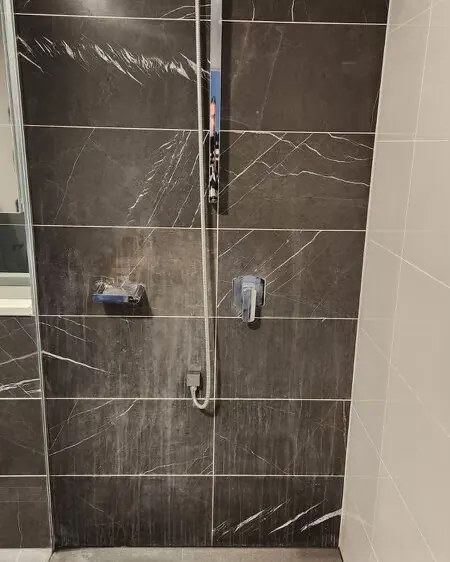
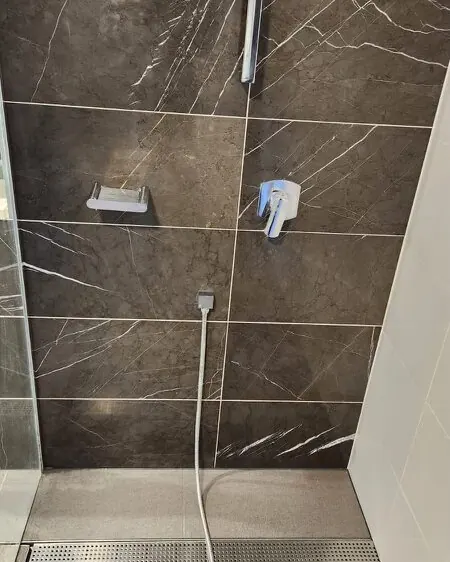
What we do to a shower.
Shower walls in natural stone need a sealer that actually works and a cleaner that does not attack it. When either fails, a film of soap, shampoo and hard-water minerals builds until the stone looks dull and the veining disappears. A stone-safe strip removes the film, the surface is restored, and a penetrating sealer is applied so it does not come back as fast.
- Soap and mineral film stripped with a stone-safe cleaner
- Surface restored and dried
- Grout cleaned and resealed
- Walls and floor sealed against future build-up
The price shape.
Method first, then the band. Every figure on this site comes from invoices, never from a guess.
Shower, walls and floor
A shower is a half-day, plus drying time before use.
1 documented shower job.
Shot as found and as left, from the same spot. What could not be fixed is on every record.
Questions about showers
My marble shower looks cloudy. Is it ruined?
Almost certainly not. The cloudy film on a marble shower is soap, shampoo and hard-water mineral build-up sitting on the surface, not damage to the stone. Domestic cleaners either do nothing to it or, if they are acidic, etch the marble underneath while leaving the film in place. A stone-safe strip removes it and the stone underneath is usually fine. The reason it built up is nearly always a failed or missing sealer, so the job finishes with a penetrating sealer that resists the build-up coming back as fast. You will also want a cleaner that is pH-neutral, which we leave with you.
How often should marble be sealed?
It depends on the surface and what it takes. A kitchen benchtop or a shower, which see acid, oil and water daily, are usually resealed every twelve months. A floor or a table in a lower-traffic room goes two years or more. The honest test is the water bead: a few drops left on the stone for ten minutes should sit up. If they soak in and darken the stone, the sealer has worn and it is time. We add every surface we seal to a reminder list and message you when yours is due, so you do not have to remember.
What causes water marks on marble, and do they come out?
Water marks on marble are usually one of two things, and both come out. Around a basin or on a shower ledge, a white ring or haze is mineral deposit from hard water evaporating, which strips off. A dull ring where a wet glass or bottle sat is etching, where the acidity of what was in the glass has dulled the polish, and that is honed and re-polished. The two look similar and are handled differently, so a photo helps us tell you which you have. Neither is a reason to replace the stone.
What is wrong with it
Other surfaces
Send a photo of the shower.
Two or three photos, your suburb, and what is bothering you. Most benchtop, vanity and table quotes come back the same day.
