
Travertine · Sydney
Travertine, filled and honed back to even.
The holes are the point of travertine and also the problem. They hold dirt and stains, the fill falls out, and the surface goes patchy. Refilling and honing brings it back to one even plane.
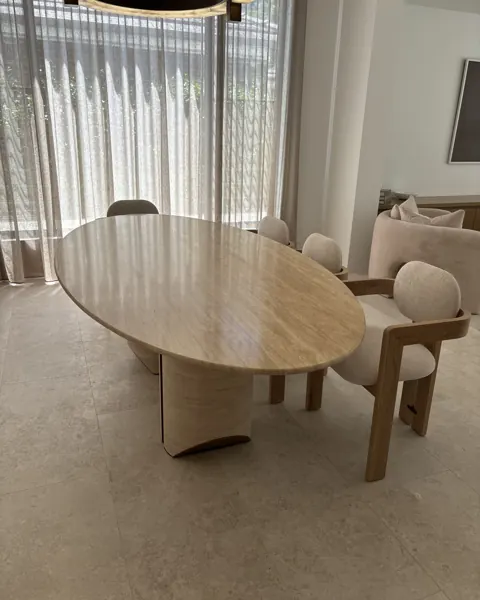
Travertine is a limestone laid down by mineral springs, which is why it is full of small voids. Most travertine floors and tables are sold filled, with the holes packed with a resin or cement that matches the stone. Over time the fill wears out, the holes open, and they start collecting dirt and holding stains. The surface goes from even to pitted, and cleaning makes it worse because the dirt just moves into the holes.
Restoring travertine means filling the open holes with a matched compound, honing the whole surface so the fill and the stone sit at one level, and sealing it so the pores stop taking on stains. Travertine is usually finished honed rather than polished because a high gloss on a stone this porous rarely lasts, but a polished finish is possible where the stone is dense enough.
We work travertine floors, tables and bathroom surfaces. Outdoor travertine around pools is a different conversation: it can be cleaned and resealed, but it is not a candidate for the kind of restoration that an indoor floor gets.
1 documented travertine job.
Questions about travertine
The holes in my travertine are getting bigger. Is that normal?
Yes, and it is fixable. Travertine is naturally full of small voids, and most travertine is sold with them filled. The fill wears out over time, the holes open up, and they start collecting dirt and holding stains, which makes them look bigger than they are. Restoration means refilling the open holes with a compound matched to the stone, honing the whole surface so fill and stone sit level, and sealing so the pores stop taking on stains. The result is an even surface again. Travertine is usually finished honed rather than polished, because a high gloss on a stone this porous rarely holds.
What is the difference between honed and polished, and which should I choose?
Polished is the mirror finish; honed is matte. Both are produced by the same abrasive sequence, stopped at different points. Polished shows the depth and colour of the stone at its best and reflects light, and it also shows etching and wear more readily. Honed hides small marks, gives a softer look, and is the usual choice for floors in busy houses and for travertine. Neither is more durable than the other in the stone itself; the difference is in how visible wear is. If you had polished and are tired of seeing every mark, honing is an option. If you had honed and want the depth back, polishing is the same work in the other direction.
How often should marble be sealed?
It depends on the surface and what it takes. A kitchen benchtop or a shower, which see acid, oil and water daily, are usually resealed every twelve months. A floor or a table in a lower-traffic room goes two years or more. The honest test is the water bead: a few drops left on the stone for ten minutes should sit up. If they soak in and darken the stone, the sealer has worn and it is time. We add every surface we seal to a reminder list and message you when yours is due, so you do not have to remember.
Send a photo. Get a price.
Two or three photos, your suburb, and what is bothering you. Most benchtop, vanity and table quotes come back the same day.
