
Table · Sydney
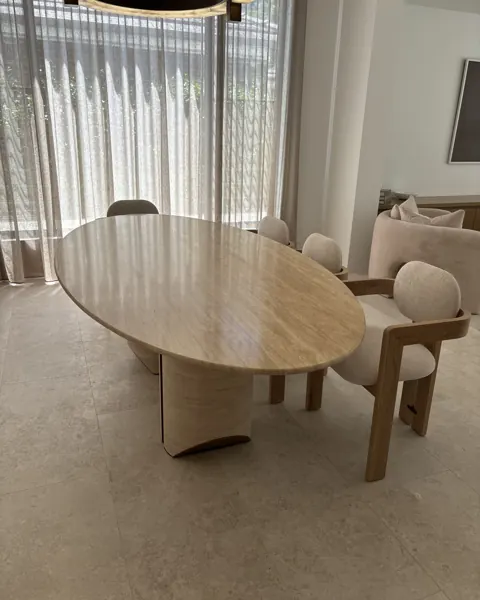
Marble and travertine tables, restored in the room.
Coffee tables ringed by glasses, dining tables gone flat and stained through open pores. Most are too heavy to move, so the work is done where the table stands, with the floor and frame protected.
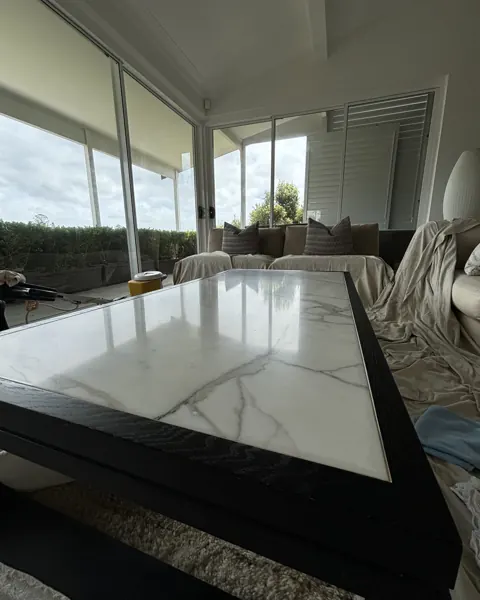
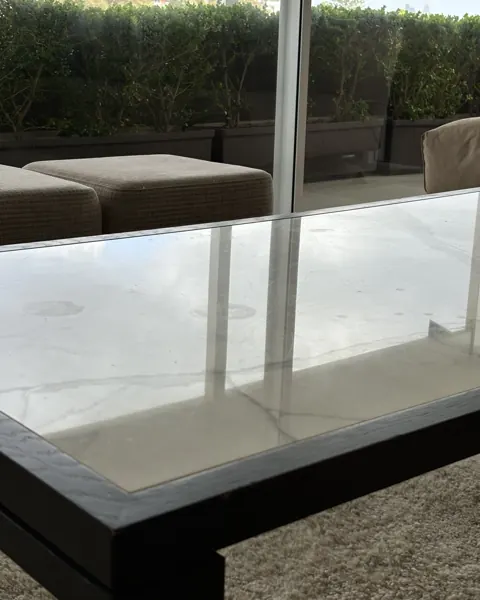
What we do to a table.
A stone table is a benchtop that gets used more casually. Wine, coffee and condensation etch marble; travertine holds stains in its open pores until they are filled. The fix is the same honing and polishing sequence as a benchtop, done in place. We protect the floor and the base, work the top, and the table is back in use the same evening.
- Etch rings and marks honed out of marble tops
- Travertine pores filled and the top honed to an even matte
- Polished or honed to the finish you had, or the one you want
- Base and floor protected throughout
- Sealed
The price shape.
Method first, then the band. Every figure on this site comes from invoices, never from a guess.
Table top
A coffee table is a couple of hours. A large dining table is a half-day.
2 documented table jobs.
Shot as found and as left, from the same spot. What could not be fixed is on every record.
Questions about tables
Can etched marble be restored, or does it need replacing?
Etched marble can be restored in place, and replacement is almost never the right answer. Etching is a thin layer of the polished surface dissolved by acid. It is not a stain and it does not go deep. The mark is honed off with diamond abrasives and the area is re-polished to match the rest of the top. On a benchtop that is usually a couple of hours of work, done on the bench with the kitchen protected. Deep etching that has left a visible dip takes more honing and blends less perfectly, and that is exactly the sort of case we cut a test patch for before committing. Replacing a benchtop means a new slab, templating, fabrication, removal, plumbing and a splashback, and weeks without a kitchen. Restoring it is a fraction of that.
The holes in my travertine are getting bigger. Is that normal?
Yes, and it is fixable. Travertine is naturally full of small voids, and most travertine is sold with them filled. The fill wears out over time, the holes open up, and they start collecting dirt and holding stains, which makes them look bigger than they are. Restoration means refilling the open holes with a compound matched to the stone, honing the whole surface so fill and stone sit level, and sealing so the pores stop taking on stains. The result is an even surface again. Travertine is usually finished honed rather than polished, because a high gloss on a stone this porous rarely holds.
What is the difference between honed and polished, and which should I choose?
Polished is the mirror finish; honed is matte. Both are produced by the same abrasive sequence, stopped at different points. Polished shows the depth and colour of the stone at its best and reflects light, and it also shows etching and wear more readily. Honed hides small marks, gives a softer look, and is the usual choice for floors in busy houses and for travertine. Neither is more durable than the other in the stone itself; the difference is in how visible wear is. If you had polished and are tired of seeing every mark, honing is an option. If you had honed and want the depth back, polishing is the same work in the other direction.
What is wrong with it
Other surfaces
Send a photo of the table.
Two or three photos, your suburb, and what is bothering you. Most benchtop, vanity and table quotes come back the same day.
